
European SMEs navigating high costs and uncertainty in smart energy uptake despite strong appetite – LCP Delta
Energy transition C&I research Customer & market insight

Small and medium-sized enterprises (SMEs) across key European markets have a strong appetite for new energy solutions despite ongoing barriers.
In particular, 44% cite high upfront costs and 25% report uncertainty around savings and payback periods as barriers to energy investments, according to new research from LCP Delta.
Based on a survey of 425 SMEs across the UK, France, Germany and Italy, the findings highlight significant investment in energy efficient lighting (over 51%), HVAC systems (42%) and smart thermostats (39%). SMEs also show a clear understanding of the benefits of further energy investments, with the majority citing reducing energy costs and improving cost efficiency (56%), enhancing staff or customer comfort (30%), and simplifying energy management and operations (29%) as their top priorities.
This is reflected in their plans for investing in new equipment over the next one to three years, including on-site solar PV (28%) and smart thermostats (33%), signalling greater focus on energy monitoring and onsite generation technologies.
Despite this, the desire for further investment is met by significant barriers, with high upfront costs being the most prominent. This is where alternative purchasing models can support further growth in the SME energy market.
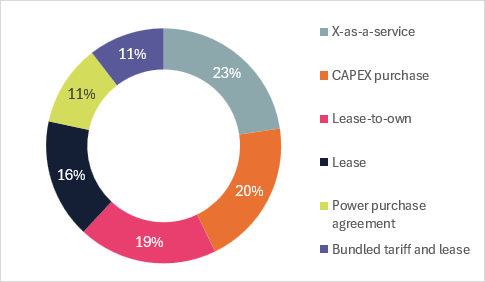
Although upfront purchase (also known as CAPEX purchase below) remains one of the most common approaches for SMEs, many are open to alternative financing options for future purchases such as lease-to-own (monthly payments with ownership at the end) and X-as-a-service (no upfront cost, provider-owned and operated with usage-or-performance-based fee) – as shown in Figure 1. These are gaining traction particularly among businesses looking to spread payments over time and outsource complex operations. LCP Delta expects these financing models to become more popular.
Figure 1: Which procurement option do SMEs prefer for future energy equipment investment?
Source: LCP Delta’s report: How willing are SMEs to engage with energy management solutions?
Other findings from the report include:
- Energy retailers have a strong foothold in owning the SME energy relationship: The majority of surveyed SMEs have energy contracts directly with their retailer, go directly to their retailer to procure this contract, and further use their retailer for energy equipment financing or installer decisions.
- When choosing between a fixed or variable electricity tariff, nearly two thirds of SMEs are willing to pay more for price certainty (fixed tariff).
- Around 25% of respondents have adopted time-of-use pricing in their electricity tariff, either fixed or variable, with Italy showing the highest adoption (35%) and the UK the lowest (20%).
Despite facing cost and resource pressures, SMEs are clearly showing that they are committed to investing in smart energy solutions. Our report highlights that they understand the value of these technologies, are making sensible decisions, and are looking ahead to the next opportunities. Now is the time to provide them with the solutions and policy support they need to keep pace with their momentum. Ultimately, by making solutions more accessible, we can help unlock greater benefits for SMEs and drive further investment across the industry.
Gabrielle Heal Commercial & Industrial Research Lead at LCP Delta


