
Ofgem signals the direction of travel for long duration electricity storage as decisions remain in play - LCP Delta
Energy transition Power markets Power insights

Ofgem has announced plans to take forward 16 projects under the long duration electricity storage (LDES) cap and floor scheme, seven of which were supported by LCP Delta with their applications.
Key takeaways from the decisions
- Duration dominates – The top 10 projects in duration, all exceeding 12 hours, were approved. This is due to duration being the key factor in the non-monetised element of the economic assessment.
- Scotland has the most projects and capacity – Seven of the projects are in North Scotland, totalling 5.1GW of the 7.6GW. All of these projects have durations above 12 hours, which could indicate that NESO analysis favours projects behind constraints, especially given the successful projects in East Anglia as well.
- High level of total capacity – A total of 7.6GW of capacity received a positive decision, which is at the top end of the original range outlined by Ofgem. Of this, 4GW is due to be online by 2030, meaning that the LDES target capacity range for CP2030 could be reached.
- Decisions are not final - A total of 61 projects, representing 21.4GW of capacity, were not selected at this stage; however, there is precedent for changes to initial decisions. In the most recent interconnector cap and floor process, several projects were initially refused at the ‘minded-to’ stage but were subsequently awarded contracts at the final stage.
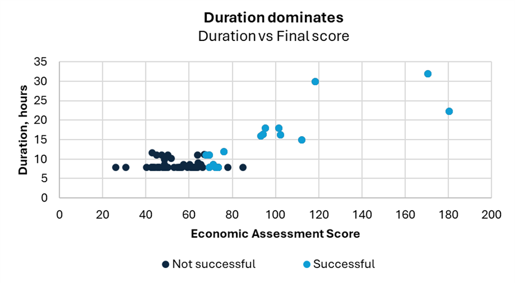 Source: LCP Delta
Sam Hollister, Head of UK Market Strategy at LCP Delta, said:
“Today's announcement marks an important milestone for long duration energy storage in Great Britain. As renewable generation continues to grow, technologies that can shift large volumes of electricity across hours and days will become increasingly important in maintaining security of supply and minimising system costs.
“The decision to award contracts at the top of the available range sends a strong signal to investors and reflects the growing recognition of the value that LDES can provide. But this should be viewed as the beginning rather than the end of the journey. Our analysis indicates that deploying up to 20GW of LDES could deliver system cost savings of as much as £24 billion between 2030 and 2050, highlighting the scale of the opportunity that remains ahead.”


